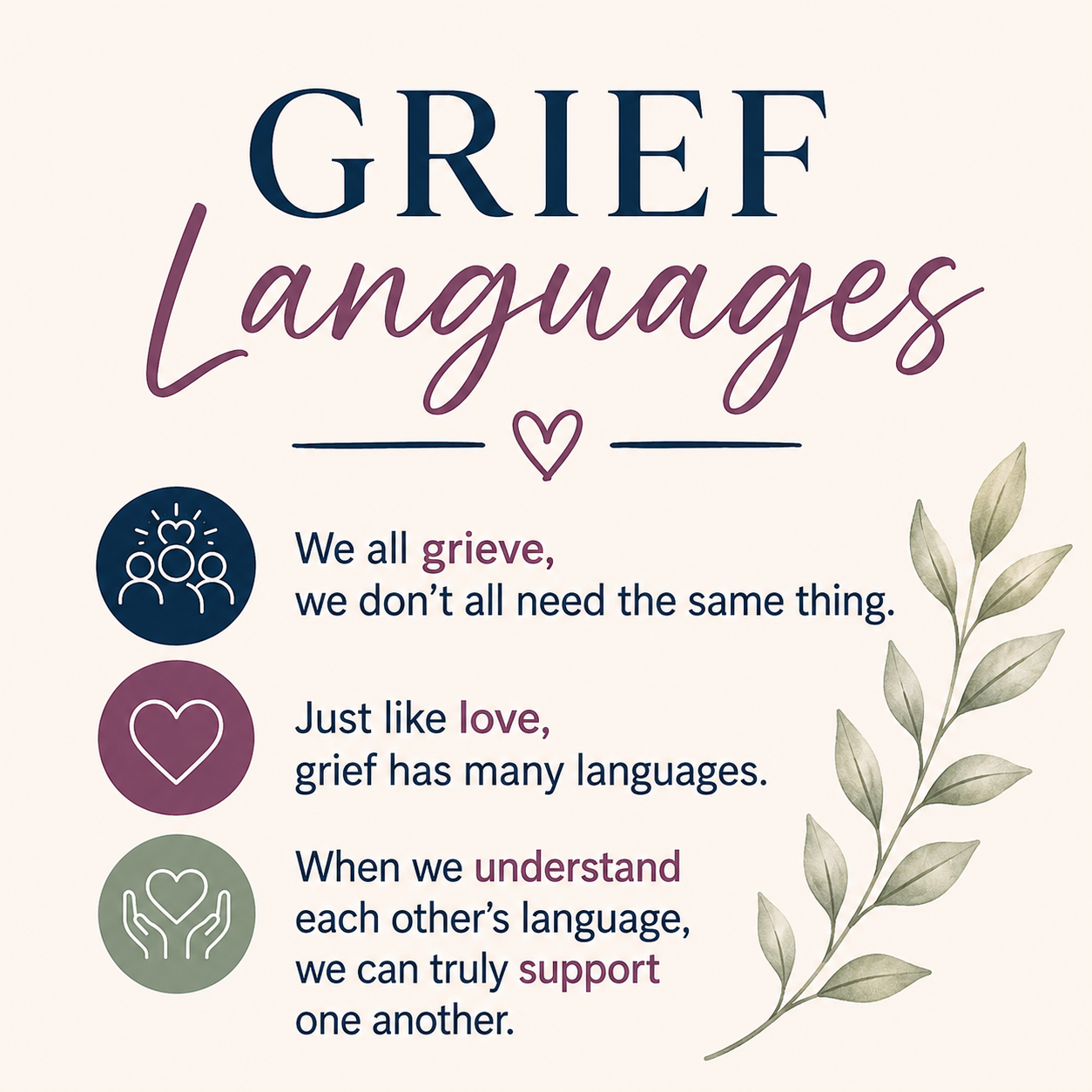
What If Grief Has Languages?
I recently hosted a Death Cafe and there was a lot of fresh grief in the room. While a Death Cafe is not a grief support group or grief circle, conversations about death naturally make space for grief to surface. The discussion and sharing turned to the support people received after someone they loved died, whether that was a pet or a person. As people shared their experiences there was a common thread emerging. Many of them weren't upset because nobody cared; they recognised and acknowledged that they had supporters around them. They were upset because people were giving them what they thought they needed, rather than finding out what the grieving person actually needed.
I reflected for days after this event and the first thing that came to mind was the concept of the five love languages. The idea of “love languages” comes from the book The Five Love Languages by Gary Chapman. Gifts. Acts of Service. Words of Affirmation. Quality Time. Affection.
If someone's love language is quality time, but their partner expresses love through acts of service, both people can walk away feeling misunderstood. One person feels unloved, while the other feels as though they're doing everything they can to show their love, but their person is telling them that they don’t feel loved.
And it made me wonder, what if grief has languages? Not different ways of grieving, but different ways of receiving support while grieving, so that the grieving person feels seen and heard in their grief. From the thousands of conversations I’ve had in my personal and professional life, I know that grief does have a language, we just haven’t taken that particular class.
The Problem Isn't Always a Lack of Support
When someone is grieving, the people around them often want to help … and some do offer their version of what they think will help.
They cook meals. They offer advice. They check in regularly. They encourage distractions. They suggest counselling. They try to keep the grieving person busy.
People are generally well-meaning and their intentions are good and come from a place of caring, but what if the support being offered isn't the support that the grieving person needs? A grieving person may feel abandoned, misunderstood or frustrated, while the people around them feel as though they're doing everything they can, but nothing is helping.
Perhaps the problem isn't a lack of support, but a mismatch.
I thought that if we had some framework for a “grief language”, just like a “love language”, that would surely go some ways to bridging the gap, both for the person grieving and the people around them wanting to offer support but not knowing what that looks like. Too often, those well-intentioned efforts miss the mark and can unintentionally cause additional hurt.
From the many conversations I’ve had with people about grief, and from my own rich grief history, I’ve noticed something that I think is important. When we feel unsupported and misunderstood in our grief, we tend to retreat from the world. At a time when life already feels very dark, the isolation creates more darkness and separation. I believe that how we are held, or not held, in our darkest hours can have a profound impact on the length, depth, breadth and colour of our grief.
Different People Need Different Things
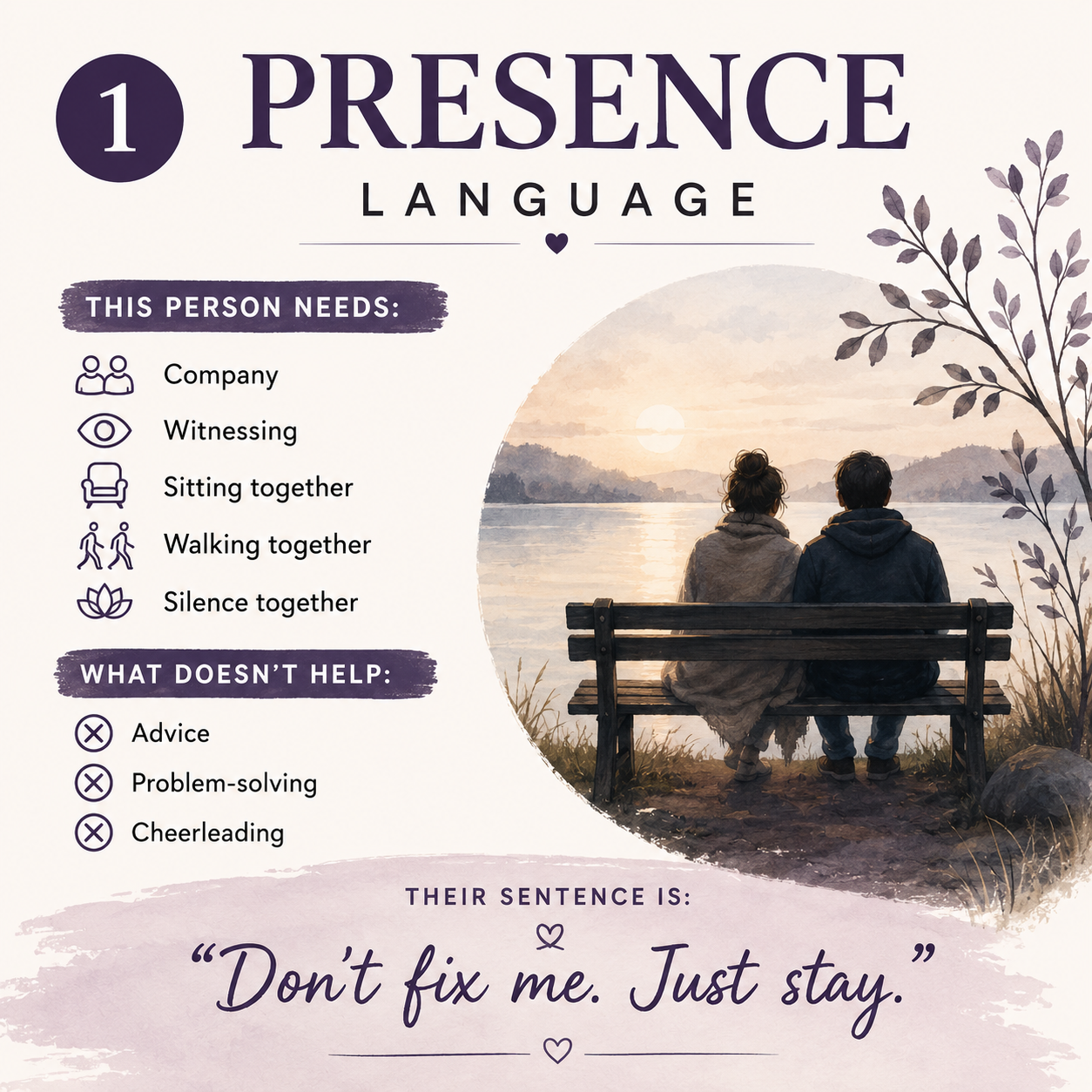
Some people need company.
They don’t want advice or solutions, just someone willing to sit beside them, share a cup of tea, take a walk or be present without trying to fix anything.
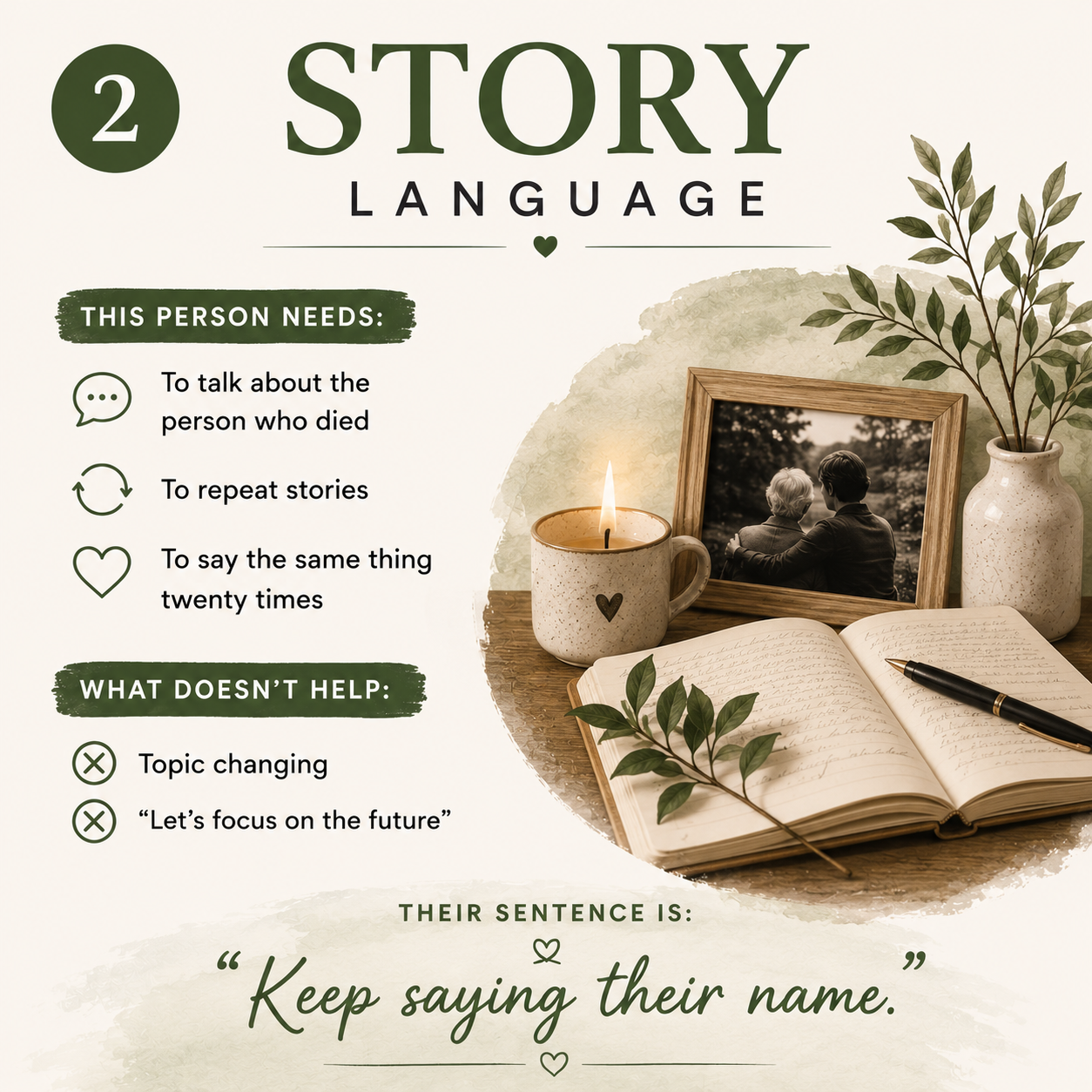
Others need stories.
They want to talk about the person who died. They want to say their name and they want you to say their name. They want to repeat memories, sometimes over and over again and what helps them most is having someone willing to listen.
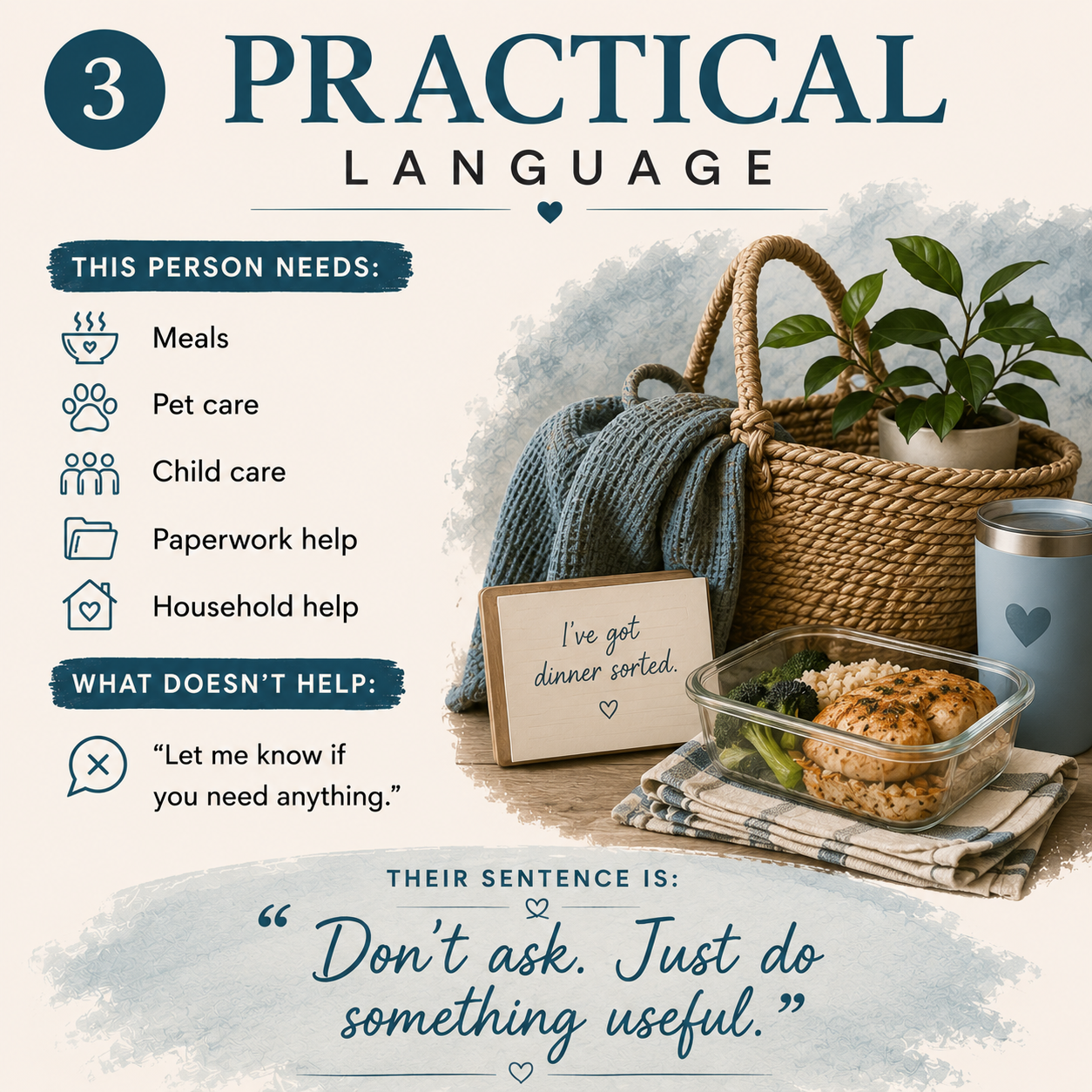
Some people need practical help.
They are overwhelmed by paperwork, phone calls, appointments, meals, household tasks and the countless administrative responsibilities that can follow a death. For them, practical support can feel like love.
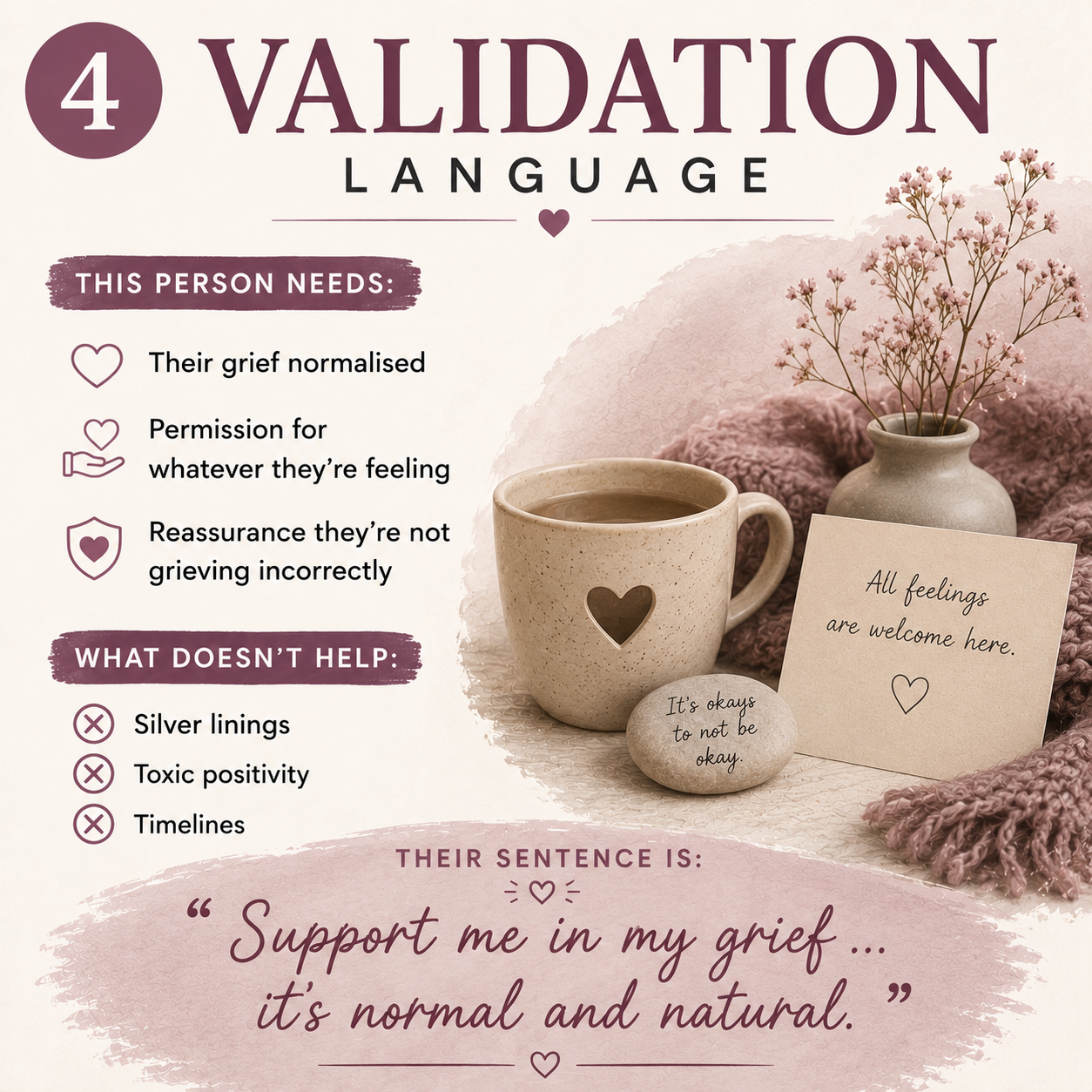
Some people need validation.
They need reassurance that their grief is normal. That grief isn’t linear and has no timeline and however they are feeling, while very uncomfortable and painful, is right for them. They are not doing THEIR grief wrong.
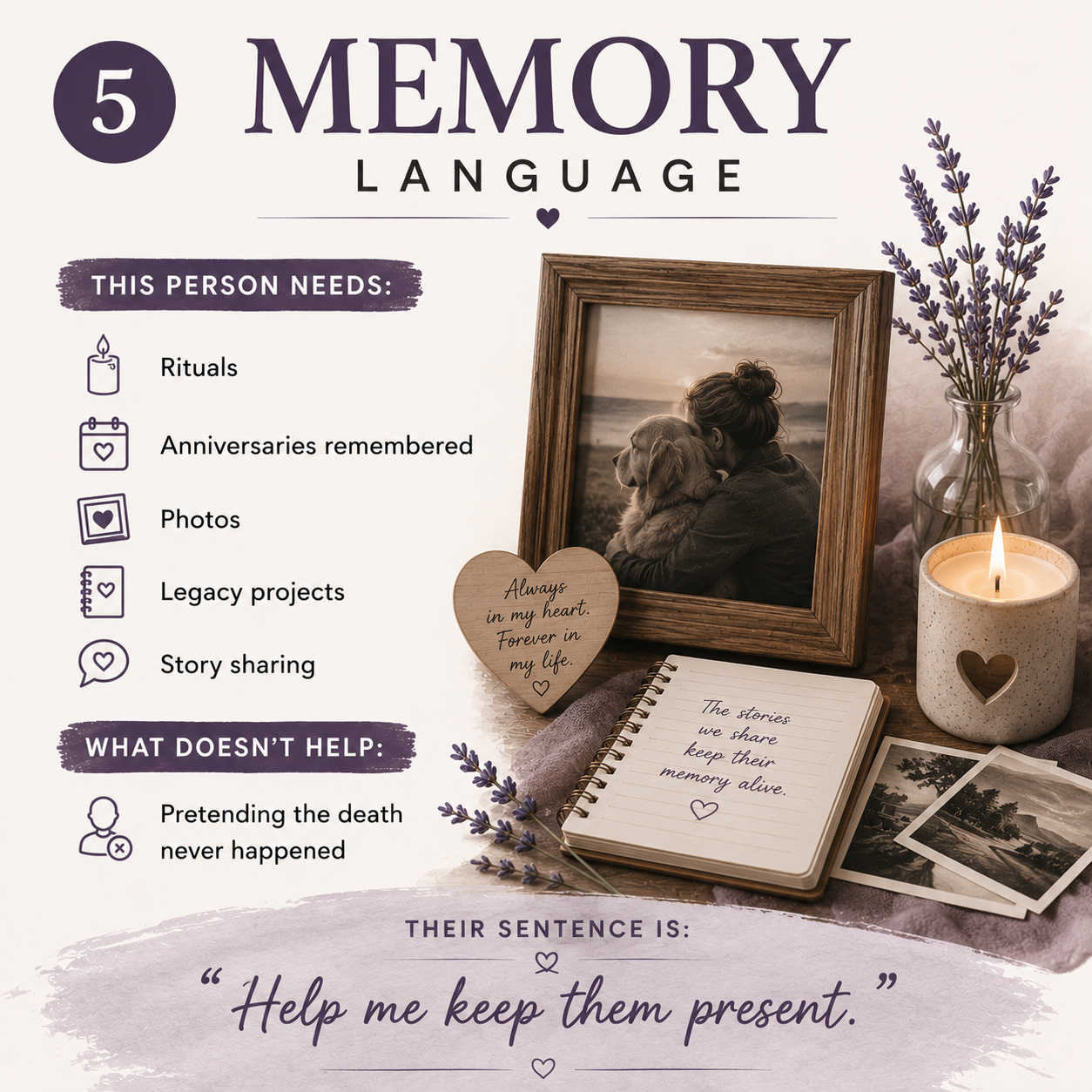
Some people need remembrance.
This might look like remembering and marking anniversaries or sharing stories that keep a loved one's memory alive.

Then there are those who need space.
While everyone else is trying to check in, visit, call or organise activities, they need quiet, solitude and time to process what has happened.
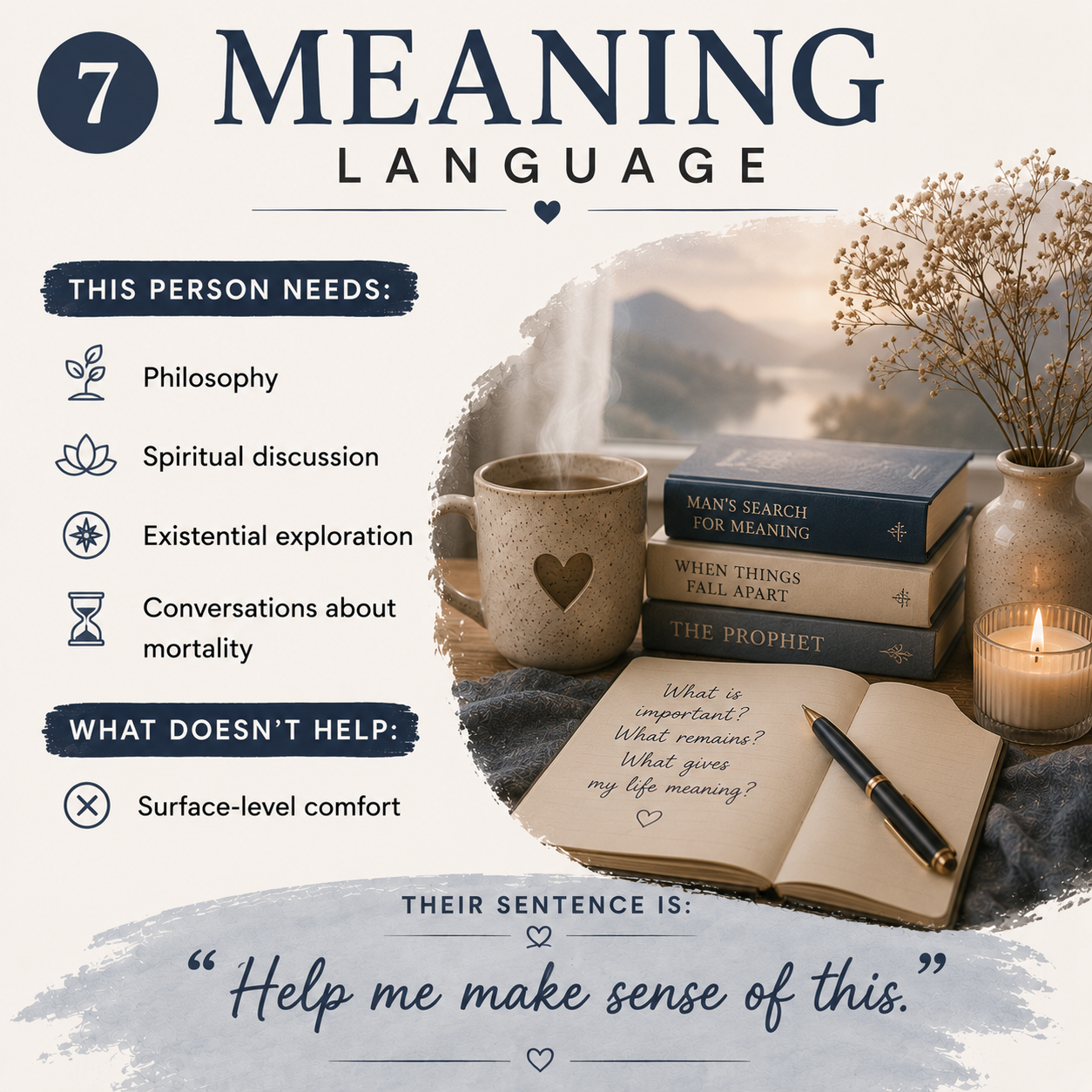
While others need ritual and meaning-making.
They want conversations about mortality, spirituality, legacy or the deeper questions that often arise when death enters our lives. This might look like creating a memory book, creating an altar or planting a tree.
We Often Offer What We Would Want
Perhaps the most interesting part of the Death Cafe discussion was that many of us naturally offer the kind of support we would want if we were grieving. If practical help would comfort us, we offer practical help. If talking would help us, we encourage conversation. If solitude would help us, we give space.
But our own preferences generally have very little to do with what the grieving person needs.
A person who desperately wants to talk about their partner may feel hurt when everyone avoids mentioning their name.
A person who needs space may feel overwhelmed by constant messages asking if they're okay.
A person who needs practical help may feel exhausted by offers of coffee and conversation when what they really need is someone to mow the lawn or walk the dog.
No one is wrong, they are simply speaking different grief languages.
What If We Asked Instead?
What if, instead of assuming what support looks like, we asked?
What do you need right now, would it help to talk? Can I mow your lawn? Would you like me to sit with you, no pressure at all to speak? Do you need some space?
Grief is personal and no two people experience it in exactly the same way.
Maybe grief literacy isn't only about understanding grief. Perhaps it's also about recognising that different people need different things from us when they are grieving.
Rather than assuming what support looks like, we can become curious. We can ask questions, listen carefully and remain open to the possibility that what would comfort us may not be what comforts someone else.